After a couple of decades in kids and family entertainment, I’ve noticed something consistent about how we talk about IP failure.
We talk about creativity. We talk about budgets. We talk about platforms.
What we talk about far less is how children and parents actually meet a character for the first time today.
And that silence matters.
Because many kids animation IPs don’t fail due to weak ideas or poor execution.
They fail because they are introduced into the market in the wrong sequence, with too much demand for attention and too little time to build familiarity.
The Hidden Shift We Don’t Discuss Enough
Children no longer arrive at shows the way they once did.
They don’t “start” with a 22-minute episode. They encounter characters—often accidentally, briefly, and repeatedly.
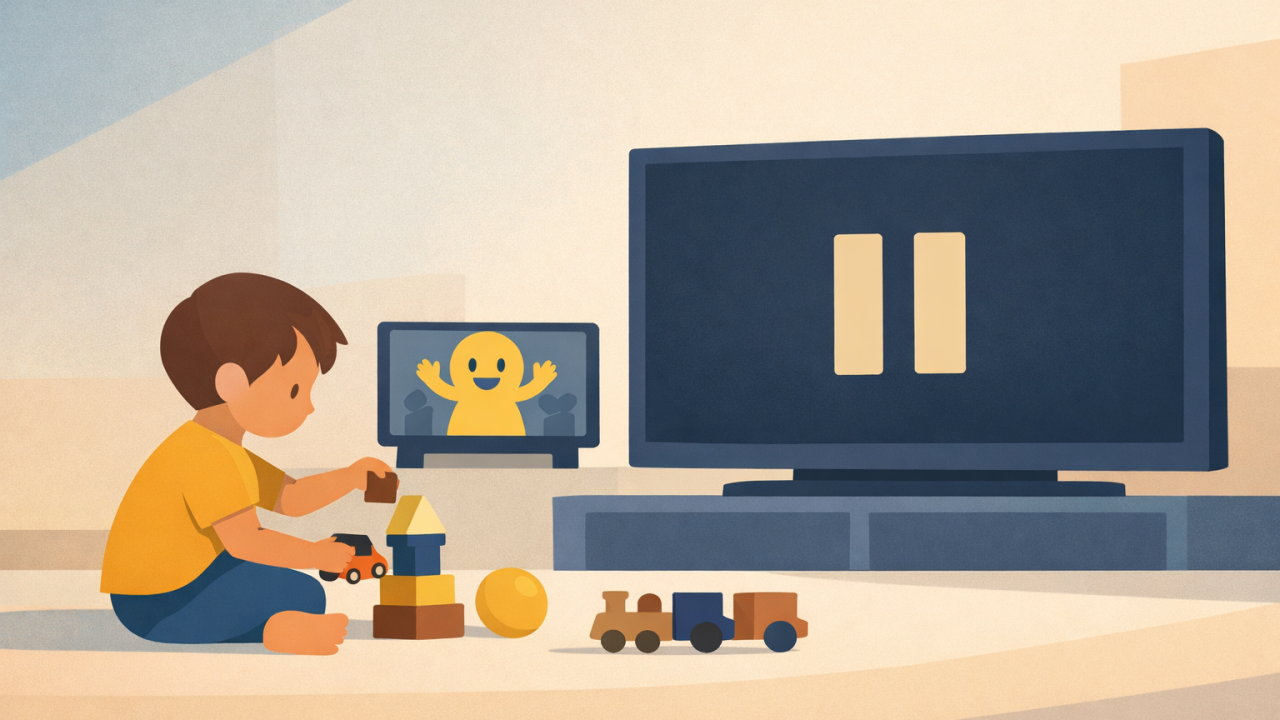
While eating. While playing. While a screen is on in the background.
This is a fundamentally different mode of discovery.
And it has consequences.
Familiarity Is Not a Creative Preference
It’s a Biological One
There’s a well-documented concept in psychology called the mere-exposure effect: humans tend to prefer things simply because they are familiar.
For children, this effect is even stronger.
A character they’ve seen five times for 15 seconds each often feels safer than a beautifully animated stranger asking for 22 minutes of emotional commitment.
This is not about attention spans. It’s about cognitive load and trust.
The Passive vs. Active Viewing Gap
This is another nuance we rarely articulate clearly.
Much of kids’ content discovery today happens during passive viewing:
- The TV is on while they play with LEGO
- A tablet runs videos during meals
- Short clips loop while attention drifts in and out
Short-form works in these moments because it demands very little.
Long-form does the opposite. It asks for focus, emotional engagement, and narrative patience.
When we introduce a brand-new IP directly in long-form, we’re often asking for too much, too soon, from an unfamiliar character.
The Parent Is Often the Real Algorithm
For preschool and younger audiences, especially, there’s another layer we underplay.
The parent.
Parents don’t evaluate shows the way kids do. They look for signals.
Is it safe? Is it age-appropriate? Is it calming or overstimulating? Is it educational—or at least not harmful?
A 20–30 second clip can answer those questions quickly.
A full episode requires trust that hasn’t yet been earned.
If the parent hasn’t already “approved” the character through repeated low-risk exposure, the play button is often never pressed—regardless of how good the show is.
Discovery Has Moved Even Further Upstream
There’s another uncomfortable reality emerging in 2026.
For some IPs, animation is no longer the first touchpoint at all.
A character might be:
- A playable skin in a game
- A looping song
- A memeable visual
- A short-form personality
Only later does it become a series.
This doesn’t diminish the value of animation. It reframes its role.
Animation is increasingly becoming the deeper layer, not the introduction.
Old Way vs. New Way: A Useful Contrast
Here’s a simplified comparison many teams find clarifying:

This isn’t about replacing one with the other. It’s about sequencing them intelligently.
Why Some IPs Quietly Outperform Others
When you look at kids IPs that sustain viewing, attract licensing interest, or scale into franchises, a common (and often unspoken) pattern appears:
They invest early in repeatable, low-friction encounters.
Through:
- Short-form video
- Music clips
- Character-led moments
- Simple, recognisable packaging
Not as “marketing.” But as infrastructure.
This allows characters to become known before they are asked to be followed.
By the time long-form content arrives, the relationship is already warm.
Packaging Is Not the Enemy of Creativity
One final nuance worth stating plainly.
Packaging is not a compromise. It’s an access mechanism.
Clear silhouettes. Readable thumbnails. Pronounceable names. Emotional clarity at small screen sizes.
These don’t replace storytelling. They determine whether storytelling gets a chance to be experienced.
Ignoring this doesn’t protect artistic integrity. It often prevents discovery altogether.
A More Useful Question for Studios
Instead of asking:
“Is this show ready?”
It may be more honest to ask:
“Has this character already earned enough familiarity— with both children and parents—to justify a long-form commitment?”
If the answer is no, the risk isn’t creative.
It’s structural.
Final Thought (and a Question)
Most kids’ animation IPs don’t fail dramatically.
They fade—after one season, muted engagement, and limited commercial afterlife.
As an industry, we’re excellent at discussing the art of the episode.
We talk far less about the science of the encounter.
And that may be the gap worth closing.
Are we over-investing in perfecting the episode—and under-investing in designing how a child meets a character for the very first time?
I’d genuinely love to hear how others see this.